

The IntendED™ Program
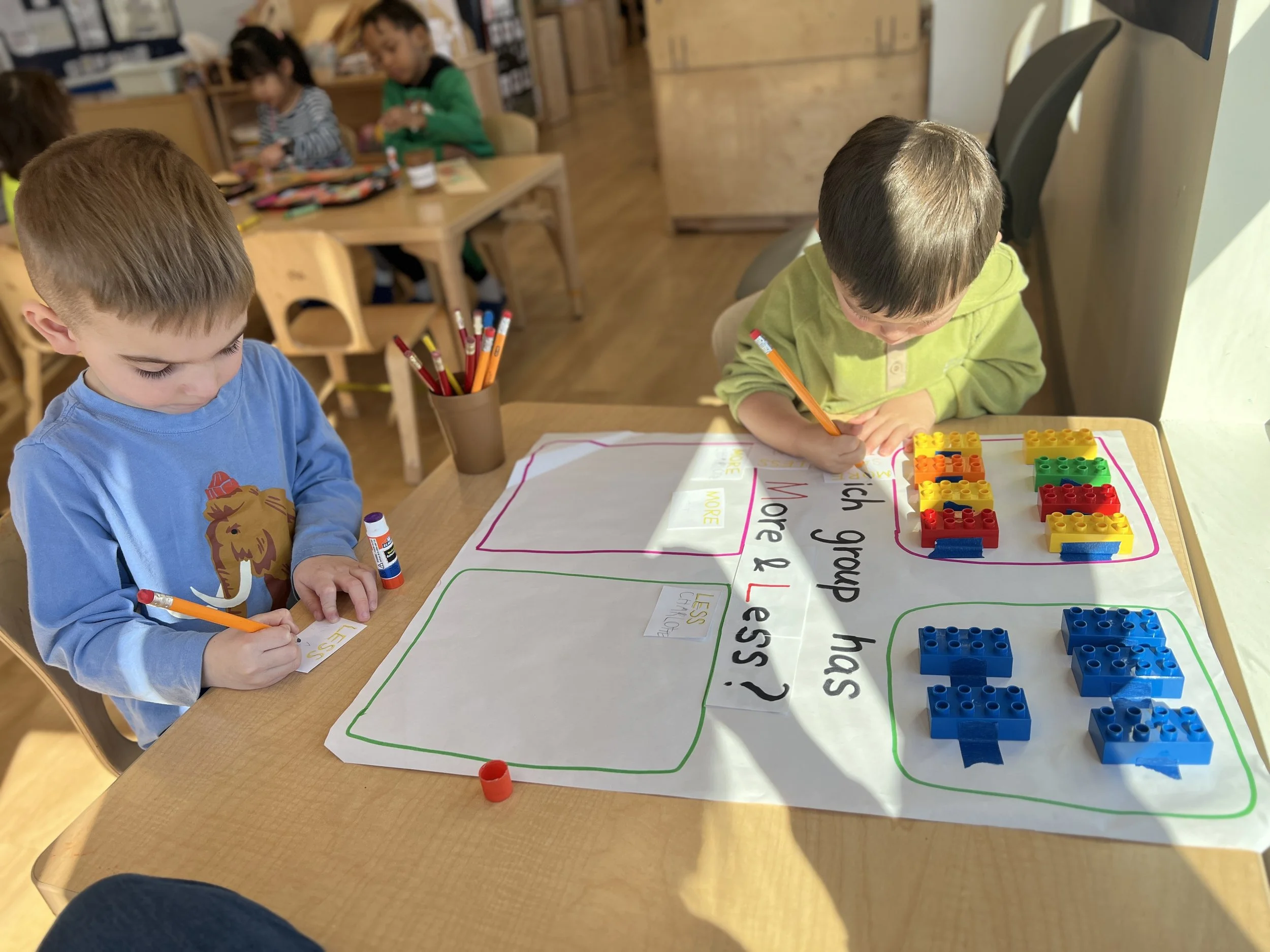
IntendED’s digital tool helps educators plan and implement skill-embedded, play-based teaching and learning into every aspect of their day.
Foundations of Our Program
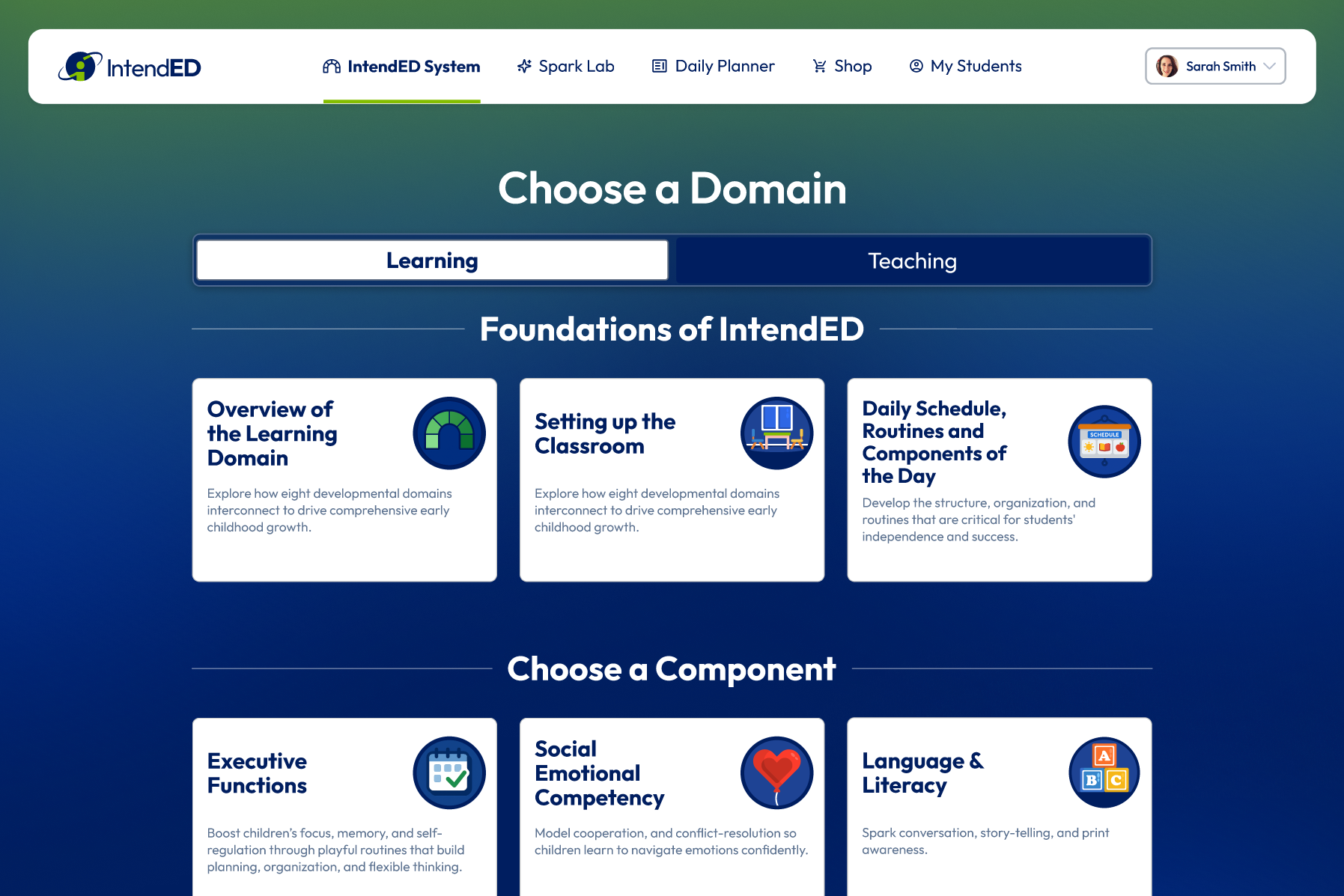
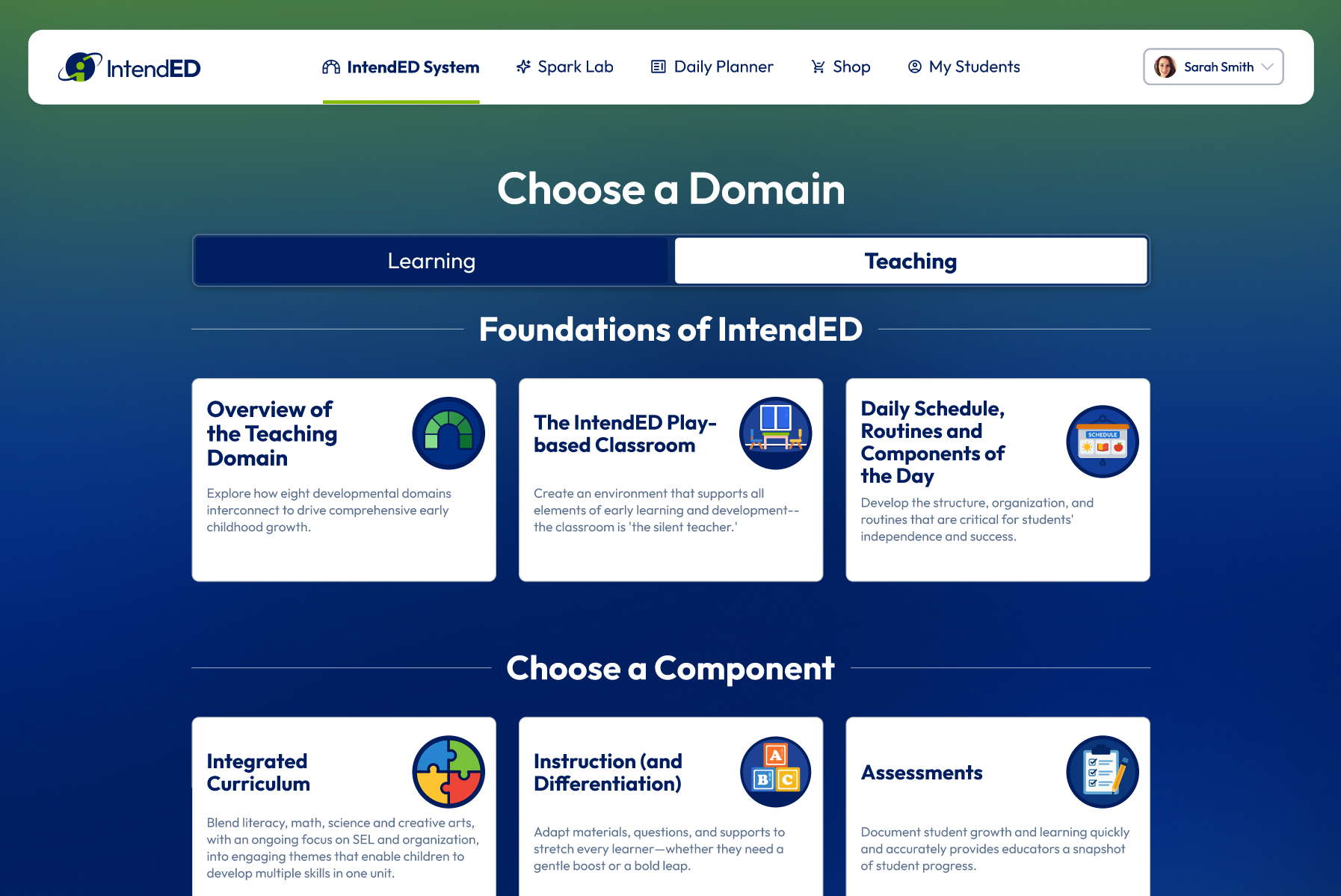
Our program is comprised of the Learning Domain and Teaching Domain.
The Learning Domain includes research-informed strategies to set up a classroom or early learning space, as well as guidance on structuring the elements and routines of the day. It guides planning of skills that students need with theme-based activities.
The Teaching Domain supports curriculum development, differentiated instruction, ongoing assessments of student growth and learning, skills tracking, home-school communication, and adult learning communities.
Learning Components
There are seven learning components that break down into the elements, skill categories, and skills that 3-6 year olds need.
Language and Literacy
Math
Science
Creative Arts
Executive Function Skills
Social Emotional Competency
Gross and Fine Motor Skills
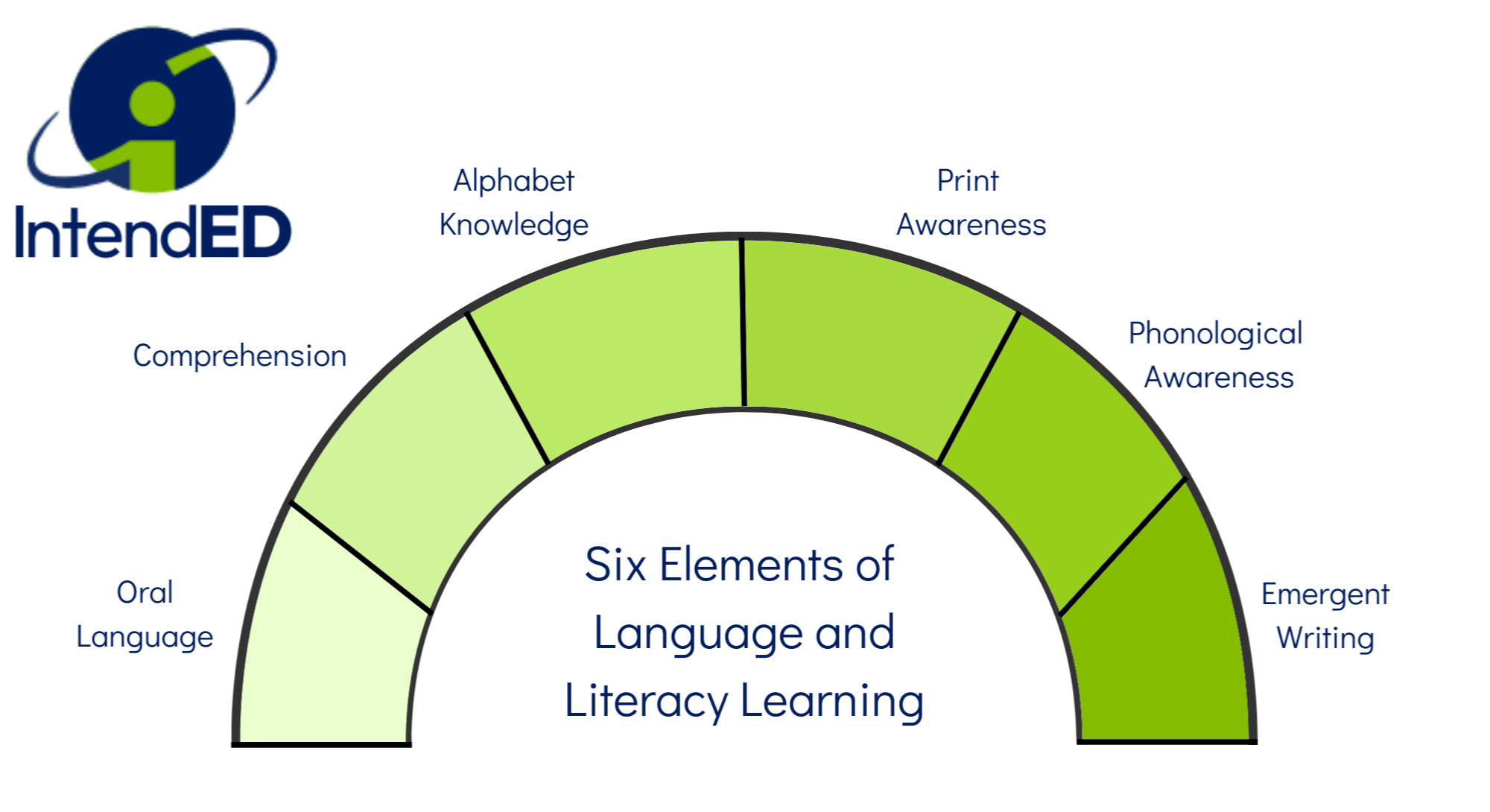
The Skills Children Need to to Access Higher Learning
Each element lists its skill categories and skills for educators to explore in more detail.
Intentional Teaching, Made Simple
For each skill, the tool outlines its purpose, offers guidance for how to teach it, provides examples of teaching—including differentiated instruction for diverse learners—and generates play-based activities that educators can create, download, or purchase all in one place.
IntendED™ Spark Lab
Plan Student-Led Learning Instantly and Effectively with Educator-Chosen Themes and Skill-Embedded Activities:
Educators can input a theme along with the skills they wish to focus on. The tool instantly auto-populates the areas of the classroom in parts of the day with theme-based activities that embed those skills. This saves hours of planning time and ensures teaching is focused on the skills teachers want and their students need.
Insights for Educators into Student Progress
IntendED tracks the elements within the seven learning components for educators to easily see where they have focused their teaching throughout the year.
Assessments document student growth, development and proficiency—tracking where children may need extra support or more challenge. By streamlining educator observation processes, and managing multiple elements, the platform helps educators adapt instruction, refine their practice, and improve student outcomes.
Structure and Routine in the Daily Schedule Supports Consistency and Agency for Students
The Spark Lab also populates the classroom’s daily schedule—including group meetings, small group time, choice time, and transitions—with additional theme-based, skill-embedded activities that build social-emotional and organizational skills like self regulation, turn-taking, and patience.